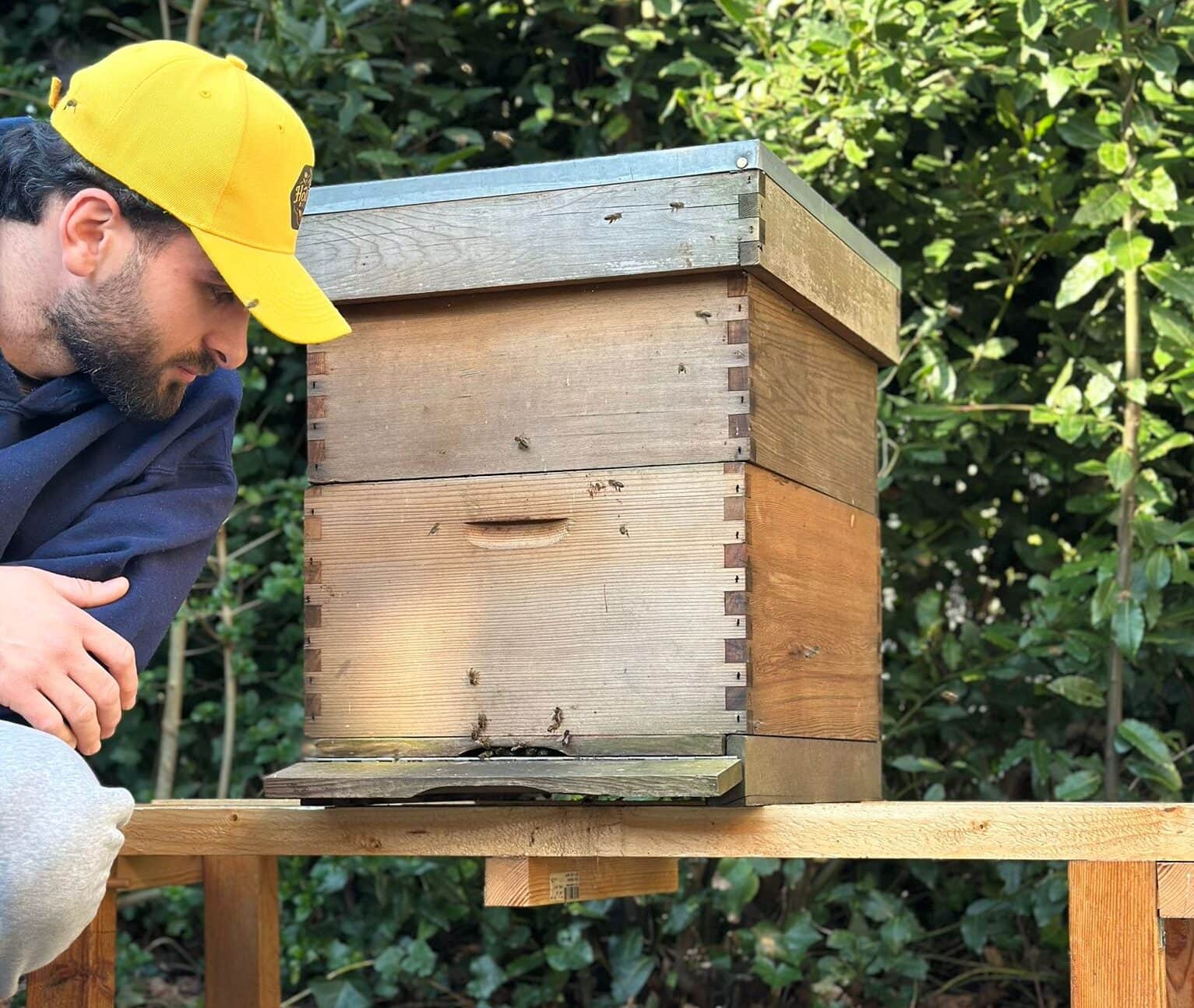
The Dutch Black Bee: Getting to Know Apis mellifera mellifera
The European dark bee has lived in the Dutch landscape for centuries. Research on Texel shows what it takes to preserve this rare population.
Holland Bijen Team
Native Beekeeping & Biodiversity
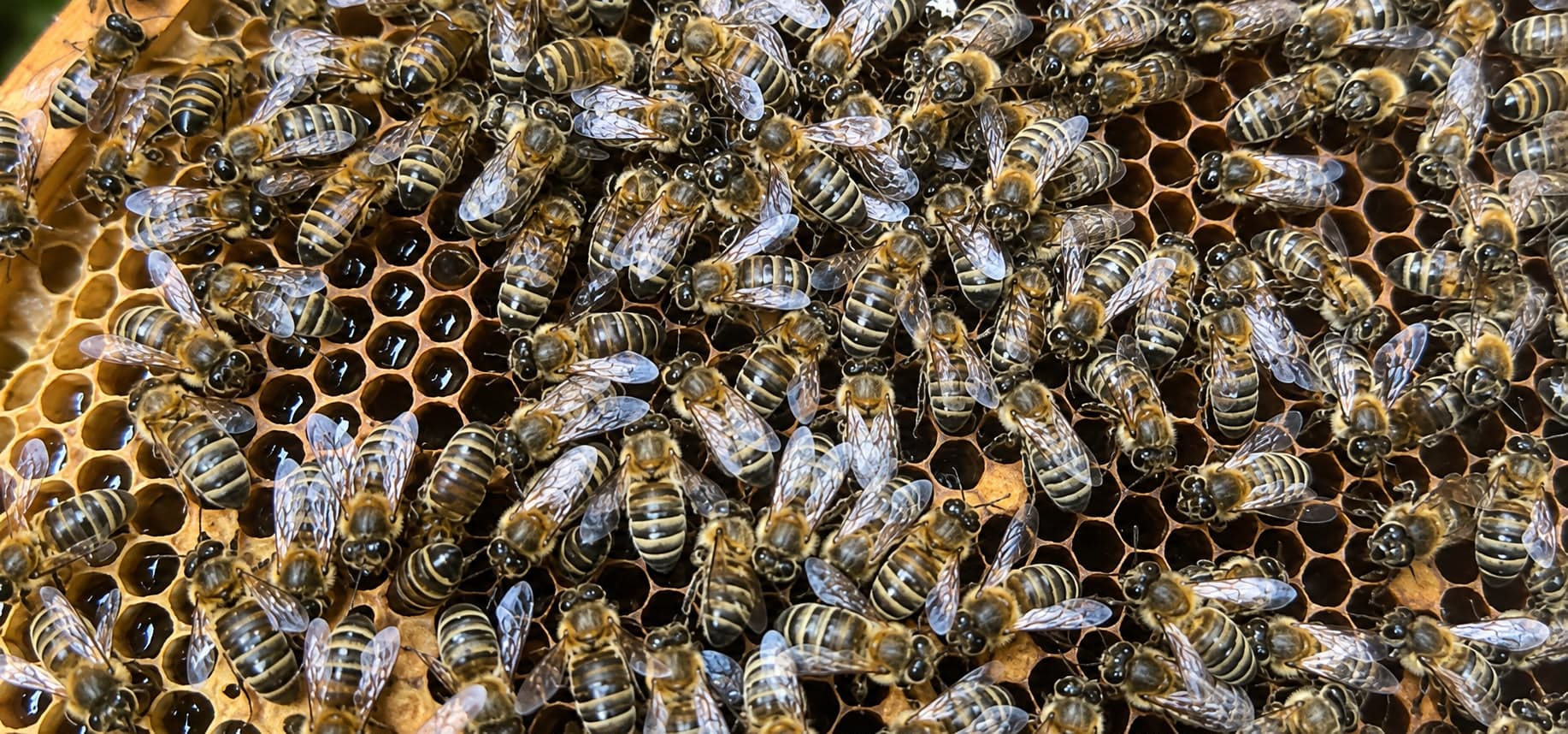
When we think about honey bees in the Netherlands, we often picture the familiar yellow-brown honey bee. But the Netherlands also has a honey bee with a much longer history in our landscape: the European dark bee, Apis mellifera mellifera, known in the Netherlands as the Black Bee (Zwarte Bij).
For Holland Bijen, getting to know this bee is about more than simply learning about another honey bee. It is about understanding genetic diversity and the importance of preserving a native population.
A native honey bee of the Netherlands
Apis mellifera mellifera is a subspecies of the western honey bee, Apis mellifera. Wageningen University & Research (WUR) describes the European dark bee as the indigenous honey bee of the Netherlands. Historically, this bee occurred across large parts of the Netherlands. Today, it has become very rare in our country. Wageningen University & Research How can we preserve the European dark bee in the Netherlands?
According to WUR, there are an estimated 150 colonies of the European dark bee, compared with approximately 90,000 honey bee colonies in the Netherlands. Wageningen University & Research – How can we preserve the European dark bee in the Netherlands?
The best-known remaining population in the Netherlands is located on Texel, where work to conserve the Black Bee has been taking place for decades. Wageningen University & Research – How can we preserve the European dark bee in the Netherlands?
Why is the Black Bee important?
A bee colony consists of more than the individual bees we see flying from flower to flower. Every population also carries genetic information that has developed over many generations.
This genetic diversity is important for conservation.
The Centre for Genetic Resources (CGN) at Wageningen University & Research works to conserve genetic diversity and genetic heritage. Conserving the European dark bee is therefore not only about preserving the appearance of the bee, but also about preserving a population and the genetic variation within it. WUR – Centre for Genetic Resources
The European dark bee also has a long history in Northern and Western Europe. According to WUR, this subspecies is native to a large area extending from France to Russia. Wageningen University & Research – How can we preserve the European dark bee in the Netherlands?
The challenge: honey bees can fly
Protecting a honey bee population is different from protecting an animal that remains within a fenced area.
Honey bees can fly several kilometres, and queens mate with drones from other colonies. Different honey bee subspecies can therefore cross with one another. As a result, the genetic distinctiveness of a local population can decrease over time. Wageningen University & Research How can we preserve the European dark bee in the Netherlands?
This makes the situation on Texel particularly interesting.
The sea forms a natural geographical barrier there. In addition, measures have been taken to prevent other honey bees from being brought onto the island. According to WUR, work to conserve the European dark bee on Texel has been taking place for around 40 years. Wageningen University & Research – How can we preserve the European dark bee in the Netherlands?
What did Wageningen University investigate?
In spring 2024, researchers from the Centre for Genetic Resources at Wageningen University & Research investigated the genetic composition of the Black Bee population on Texel.
They collected larvae from colonies belonging to 17 beekeepers and analysed their DNA. Among other things, the researchers wanted to know:
The results published by WUR in 2025 were encouraging.
The researchers found considerable genetic diversity within the population on Texel. In addition, most of the colonies examined were genetically pure according to the analyses used. Wageningen University & Research How can we preserve the European dark bee in the Netherlands?
This is important because conservation is not only about the number of colonies. Genetic diversity within a population also plays an important role.
One connected population on Texel
The research also reveals something interesting about how the colonies on Texel remain genetically connected.
WUR describes how queens can fly several kilometres to mate with drones from other colonies. This allows genetic exchange between colonies belonging to different beekeepers on the island. Wageningen University & Research How can we preserve the European dark bee in the Netherlands?
According to the researchers, the colonies on Texel therefore form one genetically connected population. This helps maintain genetic diversity. Wageningen University & Research How can we preserve the European dark bee in the Netherlands?
According to the researchers, the colonies on Texel therefore form one genetically connected population. This helps maintain genetic diversity.
Preserving more than just living bees
The work of Wageningen University & Research goes beyond preserving bee colonies in hives.
The Centre for Genetic Resources is also investigating ways to preserve genetic material from selected Black Bees for the future. WUR describes, for example, research into collecting and freezing honey bee sperm so that genetic material can be stored for a long period. Wageningen University & Research How can we preserve the European dark bee in the Netherlands?
This shows that conservation can take different forms: not only protecting living populations, but also securing genetic material for future generations.
The 2024 CGN publication Toekomst voor het behoud van de Zwarte Bij: Apis mellifera mellifera focuses specifically on the future conservation of this bee. WUR Research Portal – Toekomst voor het behoud van de Zwarte Bij
What can we learn from the Black Bee?
The story of Apis mellifera mellifera shows us that biodiversity exists at different levels.
When we think about biodiversity, we often think about the number of different species in an ecosystem. But genetic diversity within a species or subspecies is also important.
The Dutch Black Bee provides a concrete example of this.
There is a population with a long history in the Netherlands. This population has now become rare, but research from Wageningen University & Research shows that the population on Texel still contains considerable genetic diversity and that many of the colonies examined retain genetic characteristics of the European dark bee. Wageningen University & Research How can we preserve the European dark bee in the Netherlands?
This means that there is something valuable to protect.
What does this mean for Holland Bijen?
At Holland Bijen, we believe that conservation begins with knowledge.
Before we can protect a bee, people need to know that it exists, understand its history and know why genetic diversity matters.
That is why Holland Bijen wants to bring more attention to the Dutch Black Bee. Through education, workshops and responsible beekeeping, we want to introduce people to Apis mellifera mellifera and to the importance of conserving this native honey bee.
We also believe that honey can tell a story.
When honey comes from bee colonies that are part of a broader commitment to biodiversity and conservation, a jar of honey can become an opportunity to talk about much more: bees, genetic diversity, agriculture, biodiversity and our responsibility towards future generations.
But the story always begins with the bee itself.
The future of the Dutch Black Bee
The future of Apis mellifera mellifera in the Netherlands will depend on continued cooperation between researchers, conservation organisations and beekeepers.
The recent research from Wageningen University & Research provides valuable and encouraging information about the population on Texel. At the same time, the very small number of Black Bee colonies in the Netherlands shows that conserving this population continues to require attention. Wageningen University & Research How can we preserve the European dark bee in the Netherlands?
The Dutch Black Bee is not simply a dark-coloured honey bee.
It is a subspecies of the western honey bee, with a long history in the Netherlands and its own genetic heritage.
The story of this bee shows us why biodiversity is not only about how many different species we have, but also about the genetic variation that exists within populations.
If we want future generations to still know the Dutch Black Bee, its conservation begins with knowledge, cooperation and action.
Official scientific sources
Wageningen University & Research (WUR)
How can we preserve the European dark bee in the Netherlands? — 5 June 2025.
This publication is the main source for information about the Dutch population, Texel, the genetic research and its findings. WUR – European dark bee in the Netherlands
Wageningen University & Research – Centre for Genetic Resources (CGN)
DNA-behoud van de zwarte bij— 16 July 2025.
This official WUR publication describes the genetic research into the Black Bee. WUR Research Portal – DNA-behoud van de zwarte bij
Wageningen University & Research – Centre for Genetic Resources (CGN)
Toekomst voor het behoud van de Zwarte Bij: Apis mellifera mellifera — 2024.
An official CGN publication concerning the future conservation of the Black Bee. WUR Research Portal – Toekomst voor het behoud van de Zwarte Bij